
Level 1 sweep and inspection to the NFPA 211 annual standard - flue, crown, cap, and flashing checked and photographed
Chimney sweep logs do not sweep chimneys. They loosen some creosote - which then falls where a brush and vacuum still have to collect it.
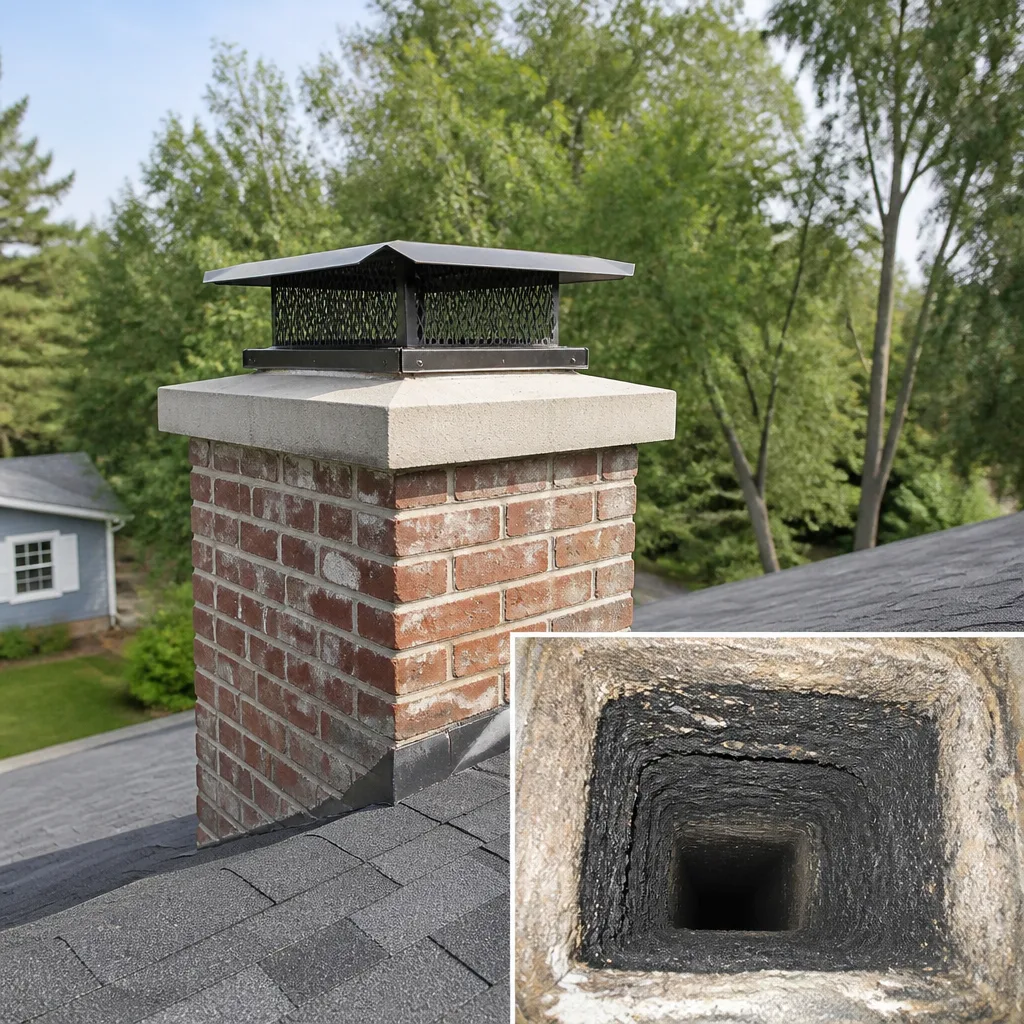
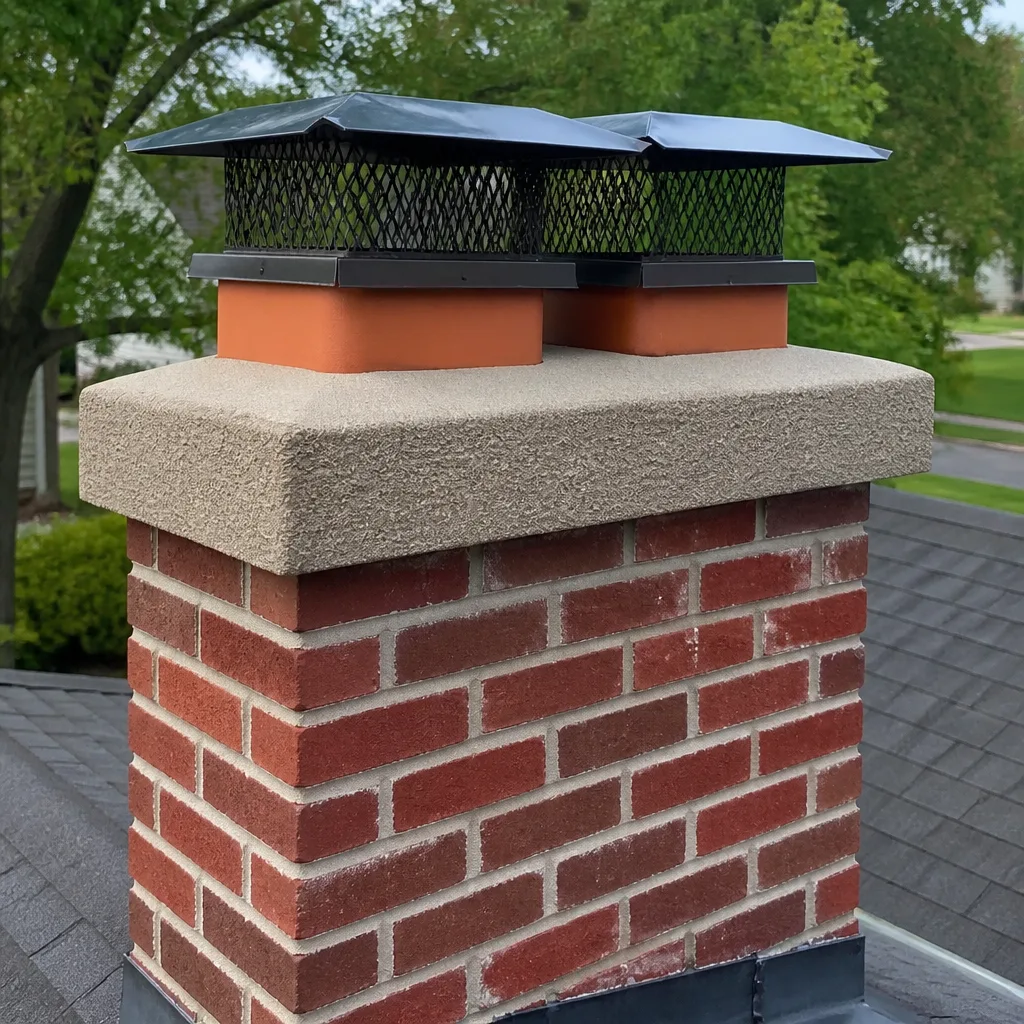
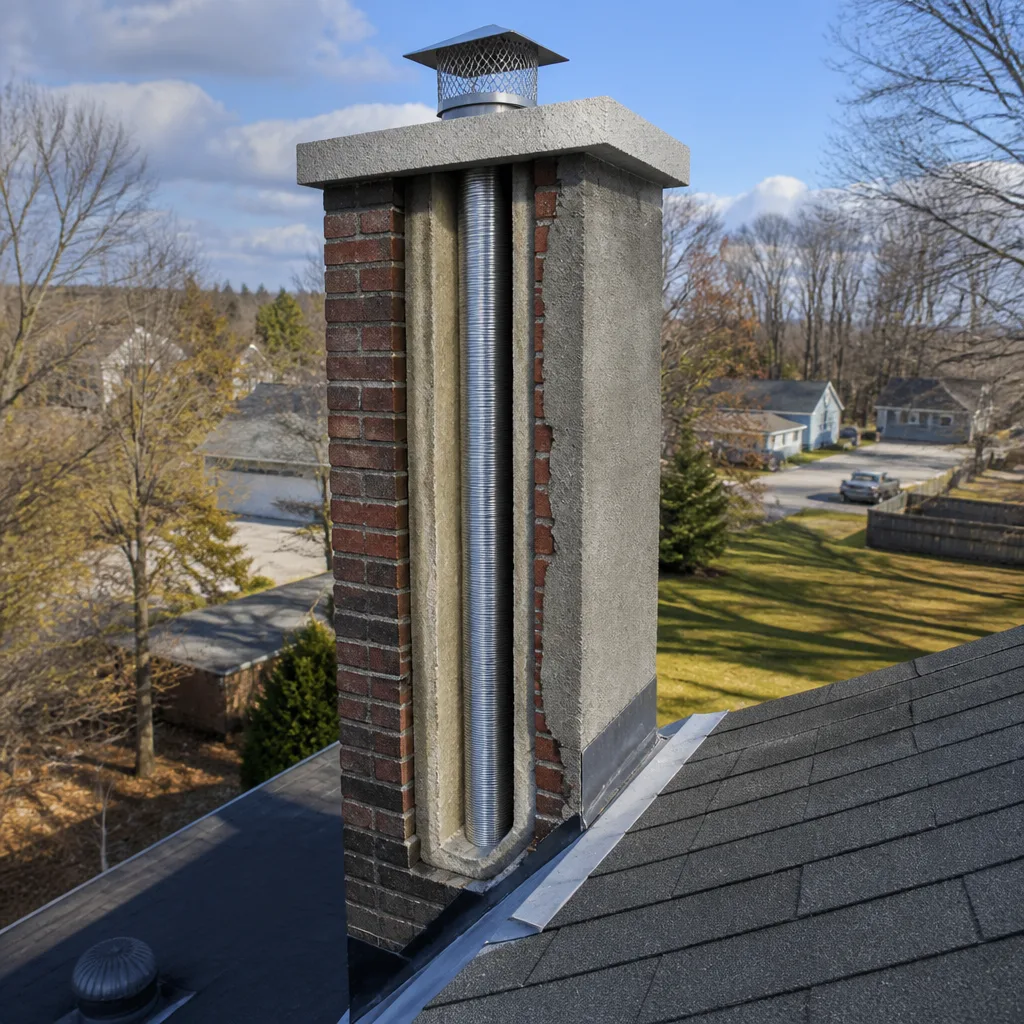
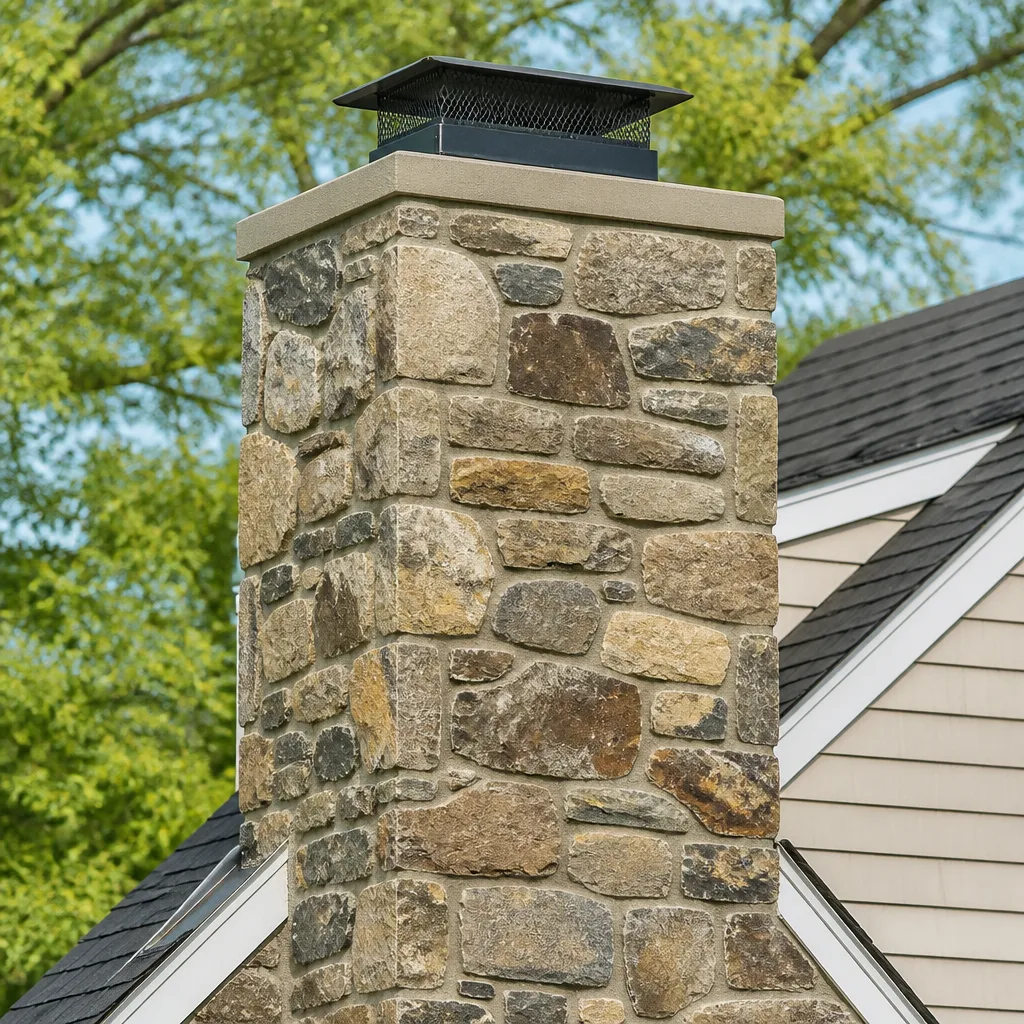
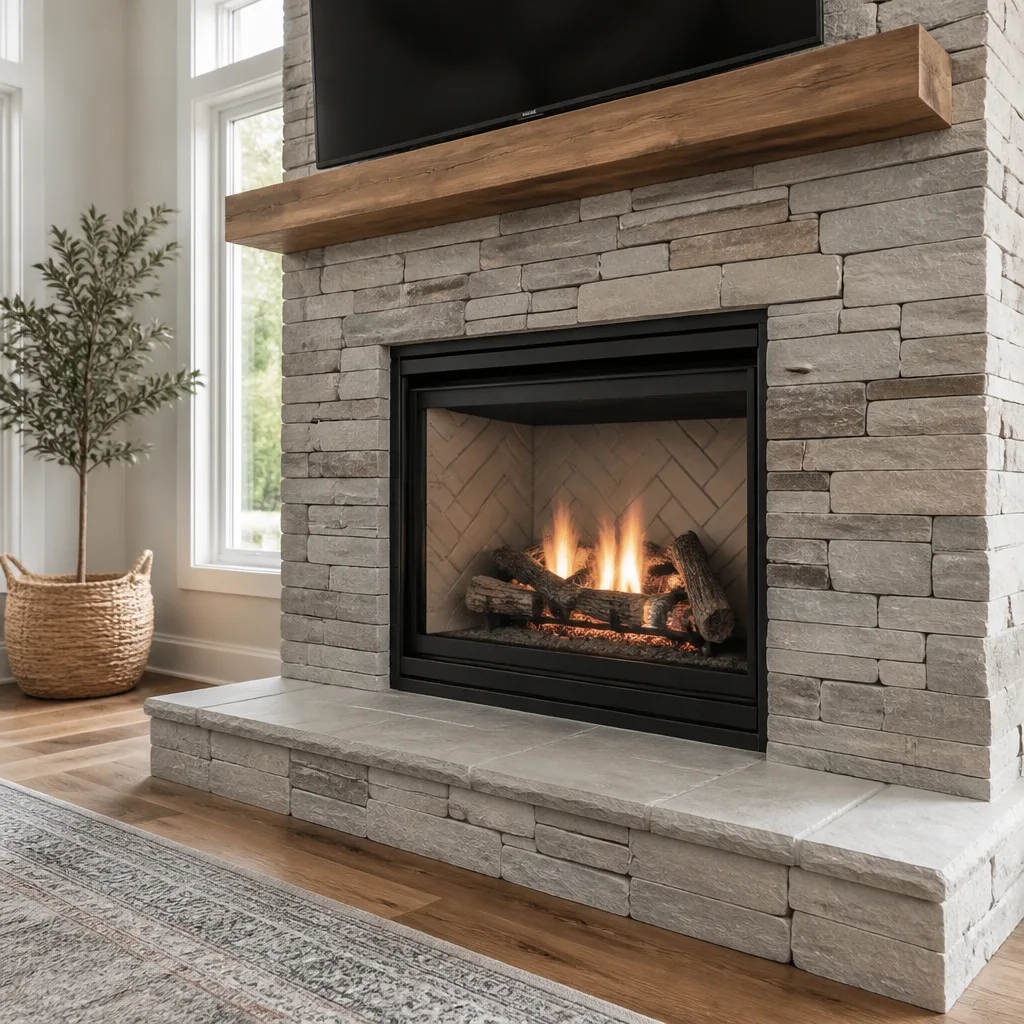
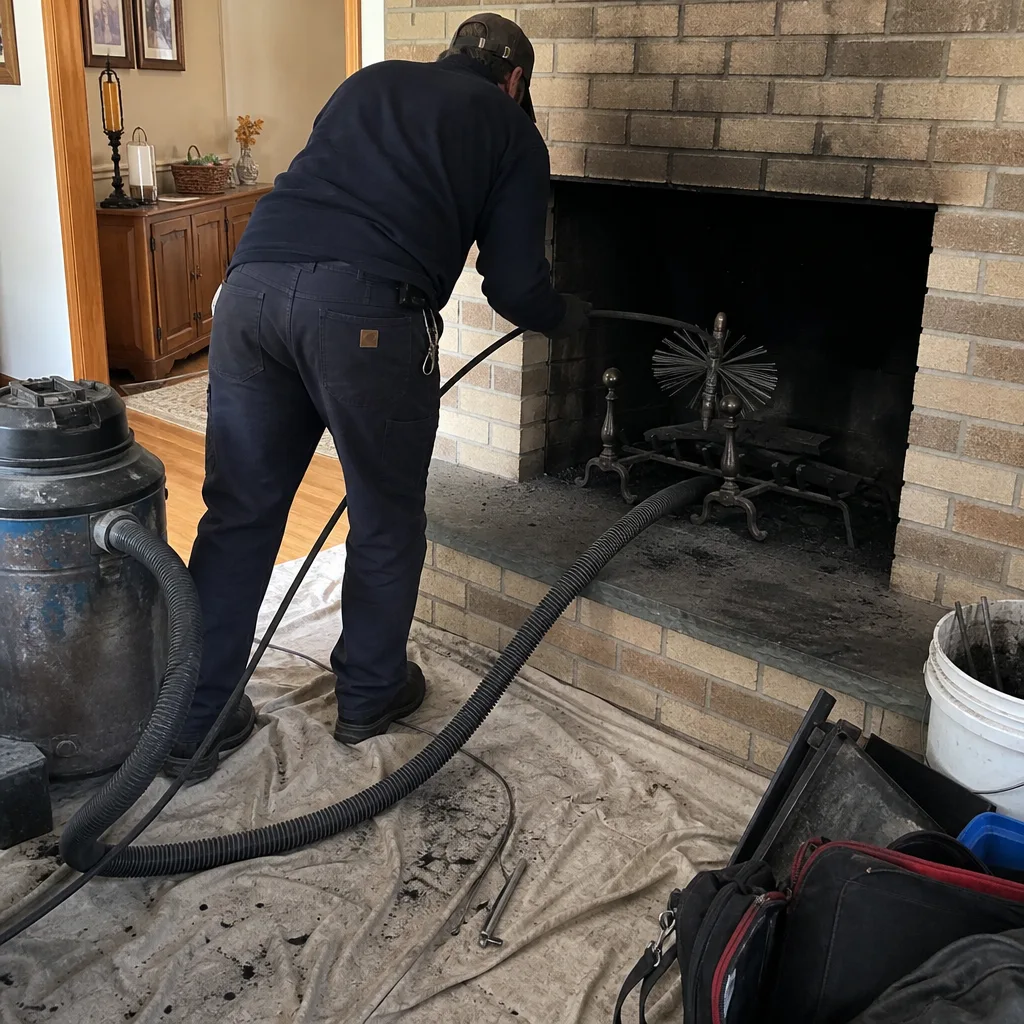 Before
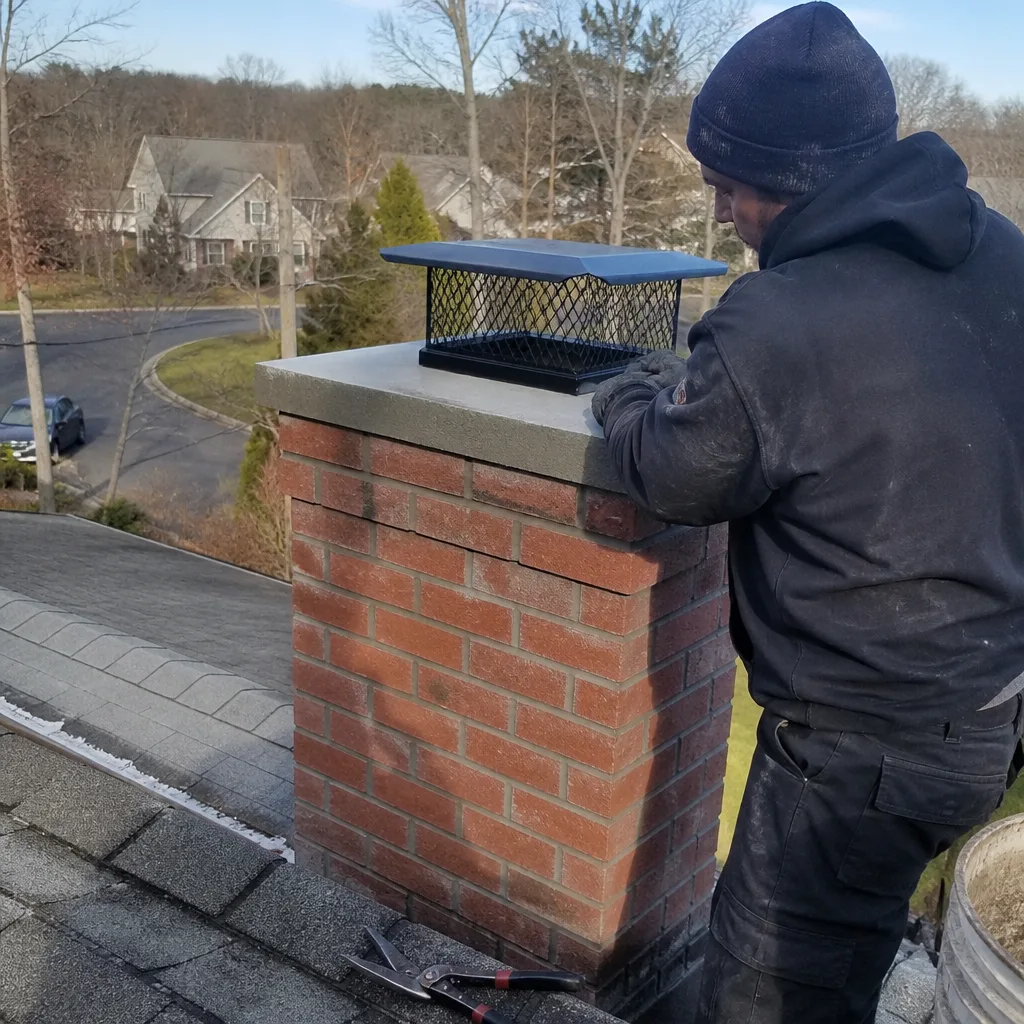 After
After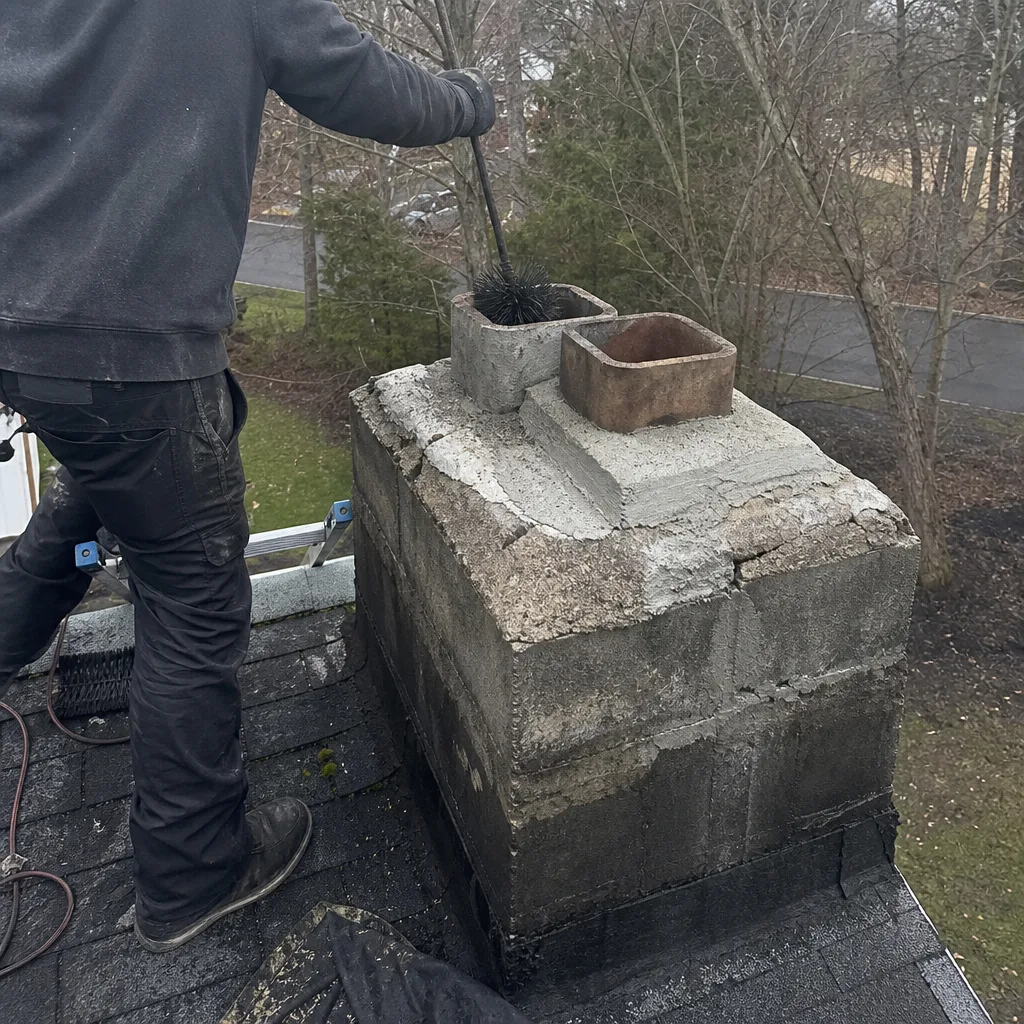 Before
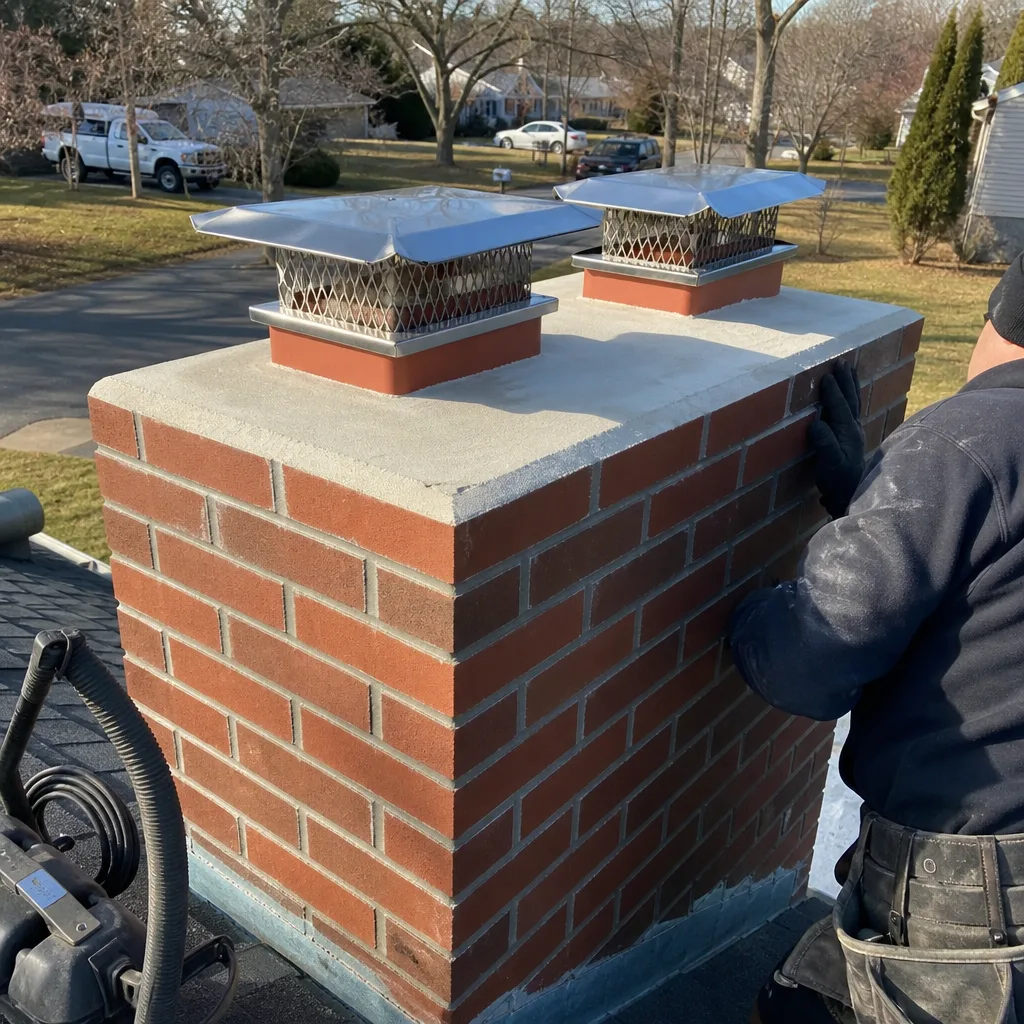 After
After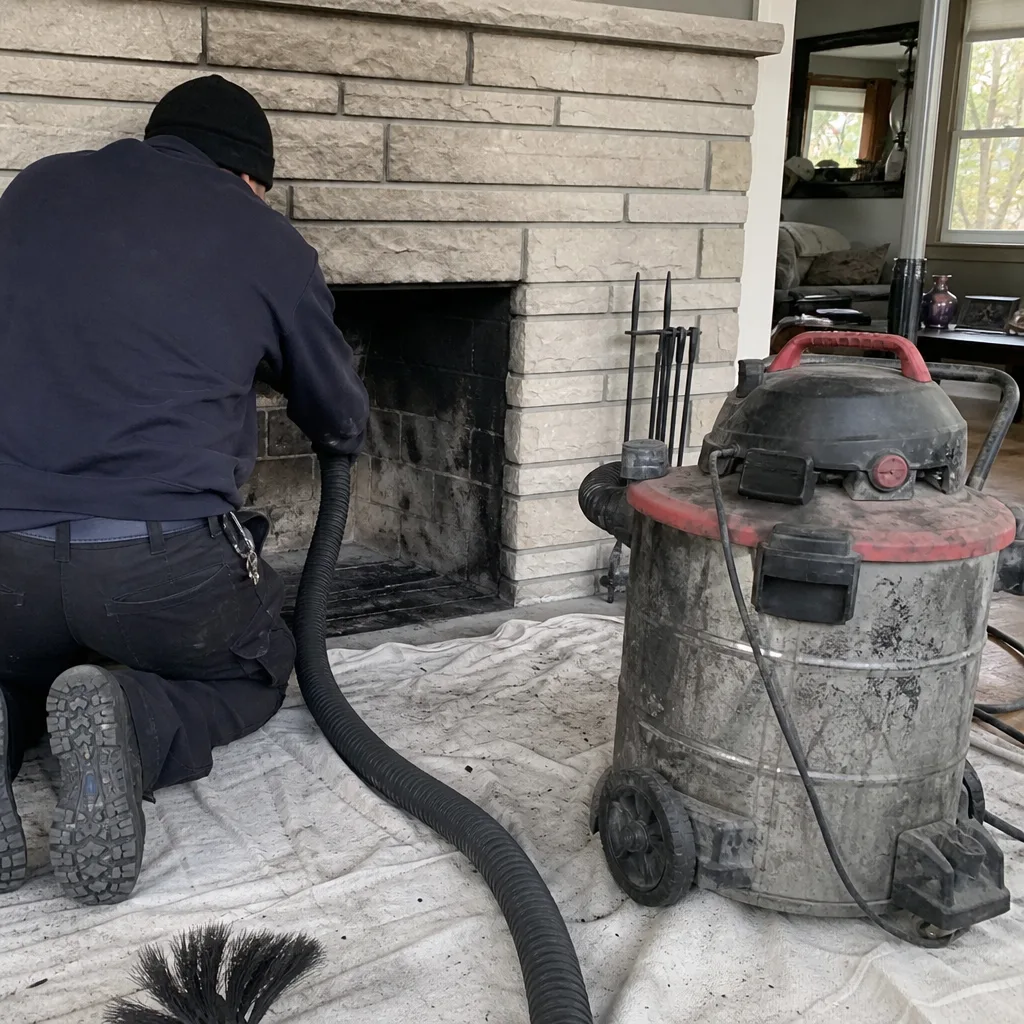 Before
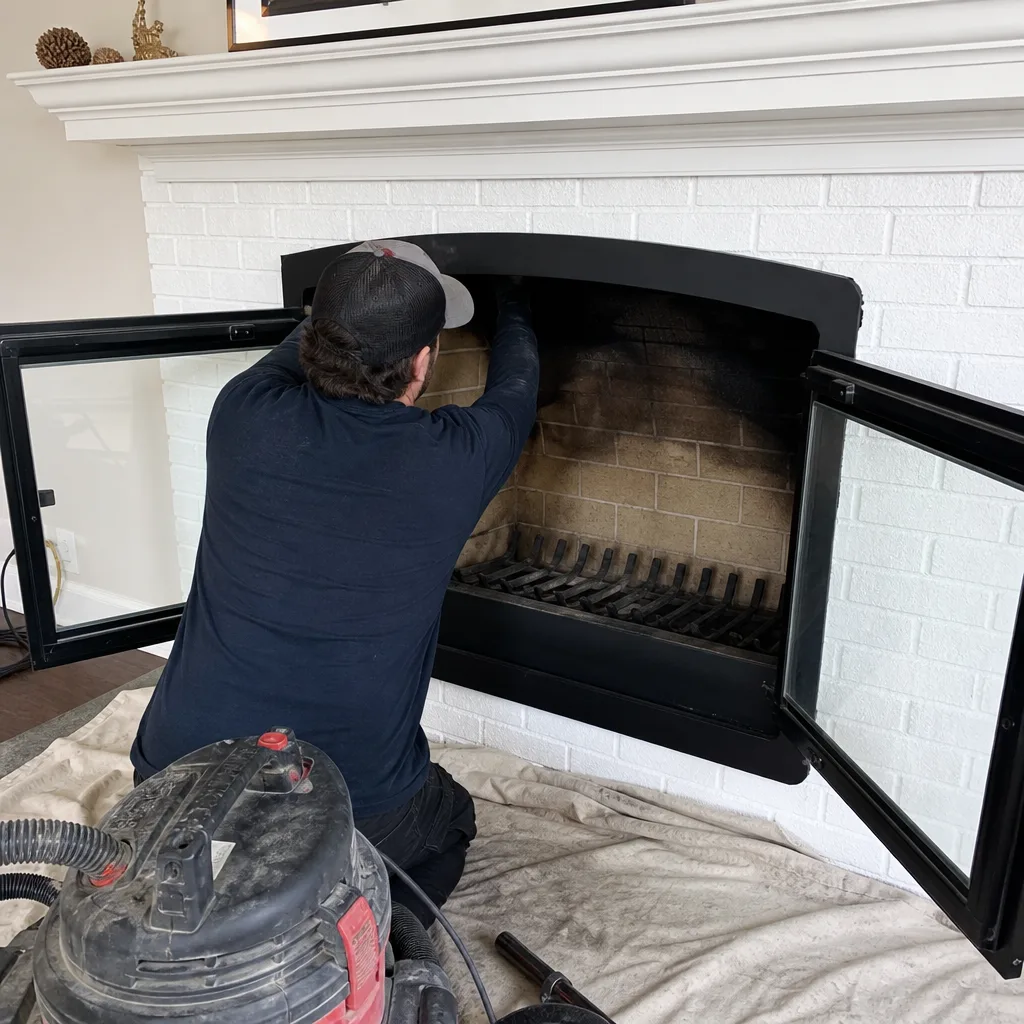 After
AfterHeatShield Chimney Cap Installation: The Commack Owner’s Guide
We stock and install HeatShield chimney caps throughout Commack, with most installations running between $325 and $675 depending on flue size, roof pitch, and whether the old cap has corroded past a simple swap. Wendell usually has the common sizes on the truck, so if you call before noon on a weekday, there’s a good chance he can be on your roof the same afternoon. Most Commack homeowners discover the problem the hard way: rain dripping down the flue, a rust stain on the brick, or a cap that rattles when the wind kicks up off the Long Island Sound.
If you have a HeatShield product and the cap has failed, you already know the brand makes a solid liner. What you may not know is that the cap sitting on top of that liner is often the first thing to go. Salt air, nor’easters, and freeze-thaw cycles in Suffolk County do not forgive thin sheet metal. Let’s look at what breaks, what it costs to fix, and whether you need to be on a ladder at all.
Which HeatShield Models This Applies To
HeatShield is best known as a cerfractory flue sealant system, not a cap manufacturer. That matters, because the cap on your chimney is rarely a true “HeatShield cap.” In most Commack homes, what you have is a standard stainless or galvanized cap from Olympia, Famco, Copperfield, or Gelco sitting on top of a HeatShield-repaired flue. We work with all of them. When someone calls us asking for a “HeatShield cap installation,” the actual job is almost always: remove the old cap, inspect the flue tile or HeatShield surface beneath it, and fit a new cap sized to the flue’s inside and outside dimensions.
That sizing step is where national outfits get sloppy. A cap that’s too large lets rain angle in during a coastal blow. One that’s too small restricts draft, which pushes smoke back into the house. Wendell measures the flue in two places before ordering or pulling anything off the truck. The oval flues common on older Commack split-levels need a different cap base than the square clay tile on newer colonials, and we have seen enough mismatched caps in Burr Farms to know the difference is usually the reason the last one failed early.
One more honest point: Top Hat Chimney is an independent service provider. We are not affiliated with HeatShield. That does not change how we stock, size, or install. It just means we are free to tell you when a less expensive cap does the job just as well, or when the HeatShield-repaired flue underneath is fine and the cap alone is the problem.
Signs Your HeatShield Chimney Cap Installation Is Failing
- Water stains on the ceiling near the chimney chase. The cap’s spark arrestor screen has corroded or the rain pan has pulled away from the flue, letting water run down the outside of the liner. In a Commack winter, that water freezes and expands inside the chase, and the drywall is the first place it shows up.
- A rust ring at the top of the flue tile. The cap base has failed where it clamps or bolts to the flue. Once rust gets a foothold there, it spreads under the cap and you are replacing the cap plus cleaning the flue surface before a new one seats correctly.
- Birds or bats in the fireplace. The mesh on the side screening has pulled loose or torn. A chimney swift or starling will find that hole before you do, and then you have a different problem entirely. Wendell has removed enough nests in Commack to know the cap screen is the first line of defense.
- A rattling sound when the wind gusts. This usually means a mounting bracket has loosened or a bolt has snapped. On a roof with a moderate pitch, wind load is higher than the original cap was rated for, and the cap is working itself apart. Ignore it long enough and the whole assembly ends up in the yard after a February nor’easter.
- Smoke backing into the room on windy days. The cap’s draft-shielding top has bent or the screen is clogged with creosote and soot. The flue cannot get clean air under those conditions, and the smoke finds the path of least resistance, which is your living room.
Replacement Cost & What’s Included
In Commack, a straightforward HeatShield-compatible cap replacement on a single-story roof runs $325 to $425 installed. A two-story colonial with a steep pitch, or a flue that needs a custom oval base, lands between $475 and $675. If the flue surface underneath needs resurfacing before the new cap seats, that is quoted separately after Wendell shows you the video from the inspection camera.
The price you get on the phone is the price on the invoice. That includes removal and disposal of the old cap, inspection of the flue and HeatShield surface, the new cap sized to your flue, installation, and the 90-Day Done Right Promise in writing. Senior and veteran discounts apply, and there is no trip charge inside our service county.
Here is the breakdown you are paying for:
- Cap (stainless steel, lifetime typical): $145 – $310 depending on flue size and screen type
- Installation and rooftop labor: $130 – $230
- Old cap removal and disposal: $50 – $85
- Flue inspection with camera report: Included, no extra charge
DIY or Call Us?
You can check a few things safely from the ground: look for visible rust on the cap, missing mesh, or a cap that sits crooked. If you see any of that, a replacement is coming. What you should not do is climb a roof in Commack with a drill and a $200 cap from a big-box store. Most DIY cap failures we see are from caps clamped to the wrong flue dimension or bolted through cracked tile, which creates the leak the cap was supposed to prevent.
This is not a high-tension spring or an electrical hazard, so it is not in the “never touch it yourself” category. But roof work with a tool bag, on a pitch, with no harness, is where homeowners get hurt. If the roof is walkable and the flue is a standard size, some owners handle it fine. If it is a two-story or the flue is oval or cracked, call us. Wendell will tell you honestly if he thinks it is a job for a pro. If it does not need doing, he will be the first one to tell you. Call (631) 502-3612 and we will talk it through on the phone before anyone climbs a ladder.
FAQs
A stainless steel cap on a Commack chimney typically lasts 8 to 15 years, but cheaper galvanized caps can start failing in 3 to 5 because of salt air and coastal wind. The mesh screen usually goes first, then the mounting hardware, and then the cap itself. If you are near the water in Commack, plan on replacing stainless every decade and galvanized much sooner.
Most damaged caps are more expensive to repair correctly than to replace, because the failure is usually corrosion or metal fatigue, not a single broken part. Small issues like a loose bolt or a bent rain shield can sometimes be fixed on the spot. If the support brackets or the screen have rusted through, a new cap is the honest answer, and it is what we recommend.
A standard cap swap takes 45 to 90 minutes from setup on the roof to cleanup at the truck. If the flue needs resurfacing or the mounting area needs repair, you may be looking at a couple of hours. We give you a time window when you book, and the sweep who shows up is the same person whose name is on the paperwork.
We stock the most common stainless cap sizes and base configurations used on Commack chimneys, which covers most single-flue and multi-flue homes. Oval flues and odd-sized clay tile sometimes need a specific base ordered from Olympia or Famco, and that takes three to five business days. Call (631) 502-3612 with your flue measurements and we will tell you what is available same week.
If your HeatShield chimney cap has failed, or you just want a straight answer about whether it needs replacing, call Top Hat Chimney at (631) 502-3612. A live person answers, and the estimate is free. Wendell Pike and his crew have been working on Suffolk County roofs since 1999, and they will tell you the truth about your chimney, even when that truth is “you have another season or two.”
Written by Wendell Pike, Owner, Top Hat Chimney at Top Hat Chimney, serving Commack and nearby areas.