
Last updated September 10, 2026
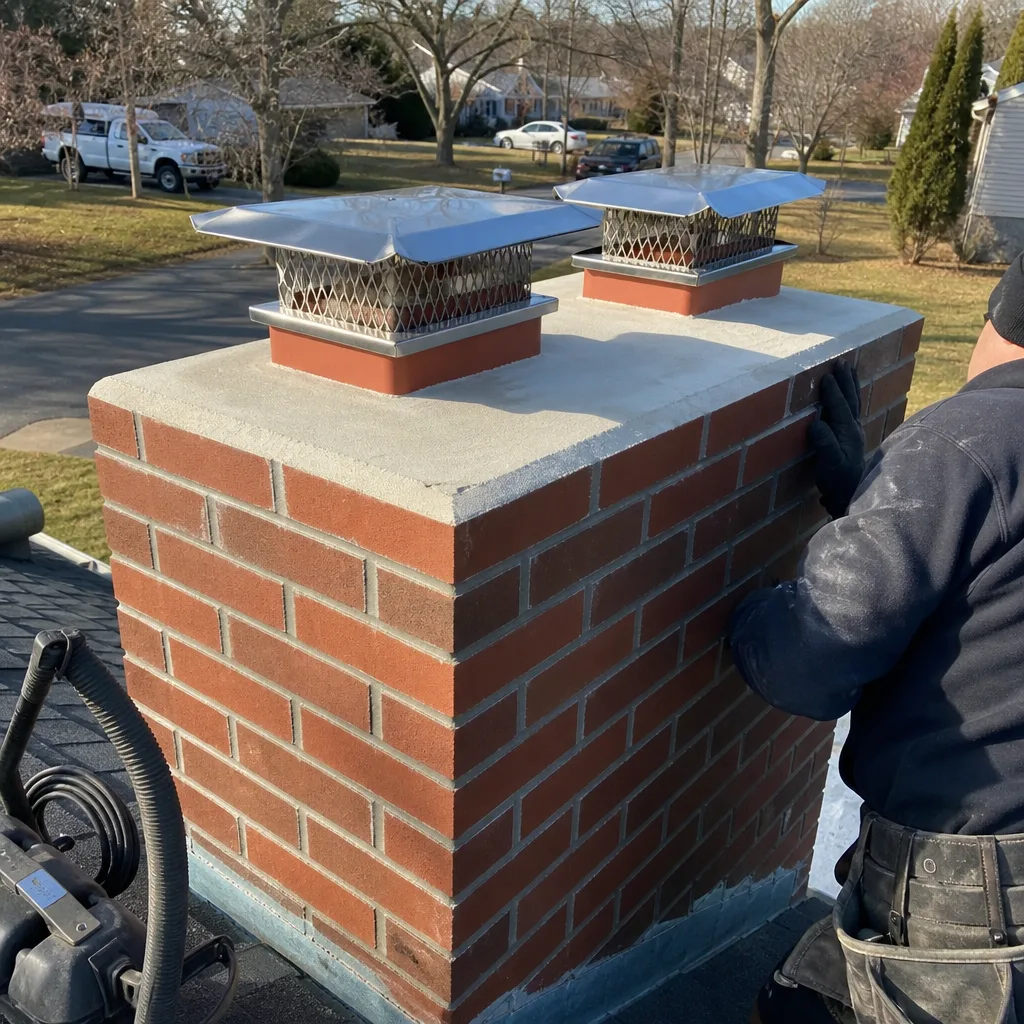
Level 1 sweep and inspection to the NFPA 211 annual standard - flue, crown, cap, and flashing checked and photographed
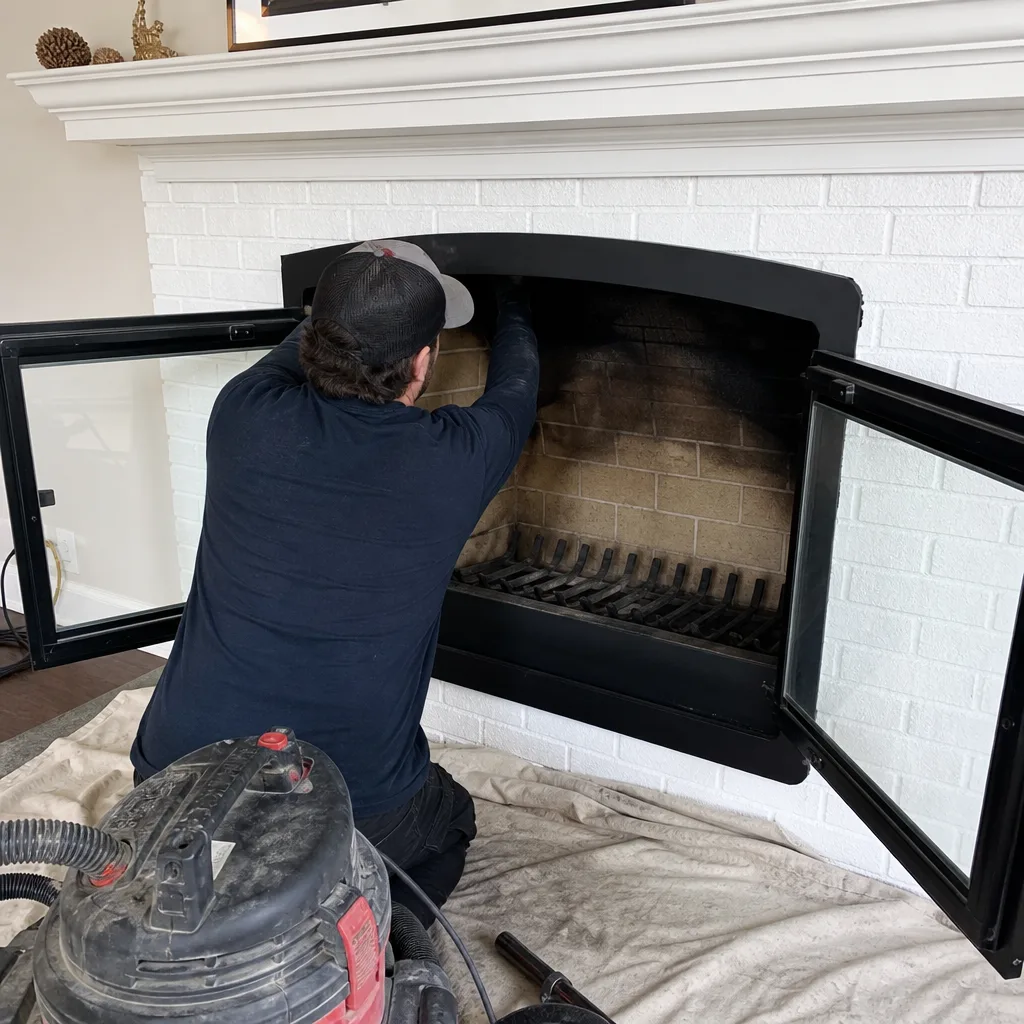
Chimney sweep logs do not sweep chimneys. They loosen some creosote - which then falls where a brush and vacuum still have to collect it.
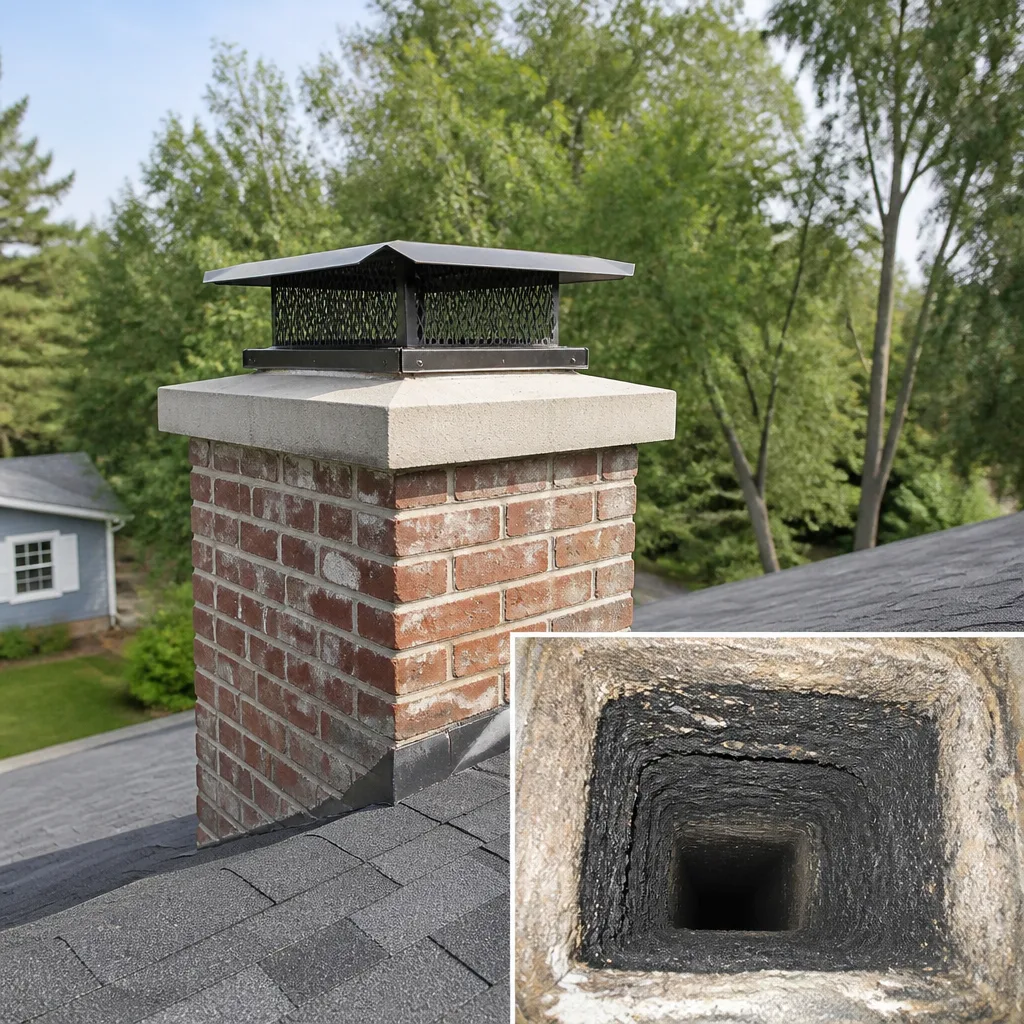
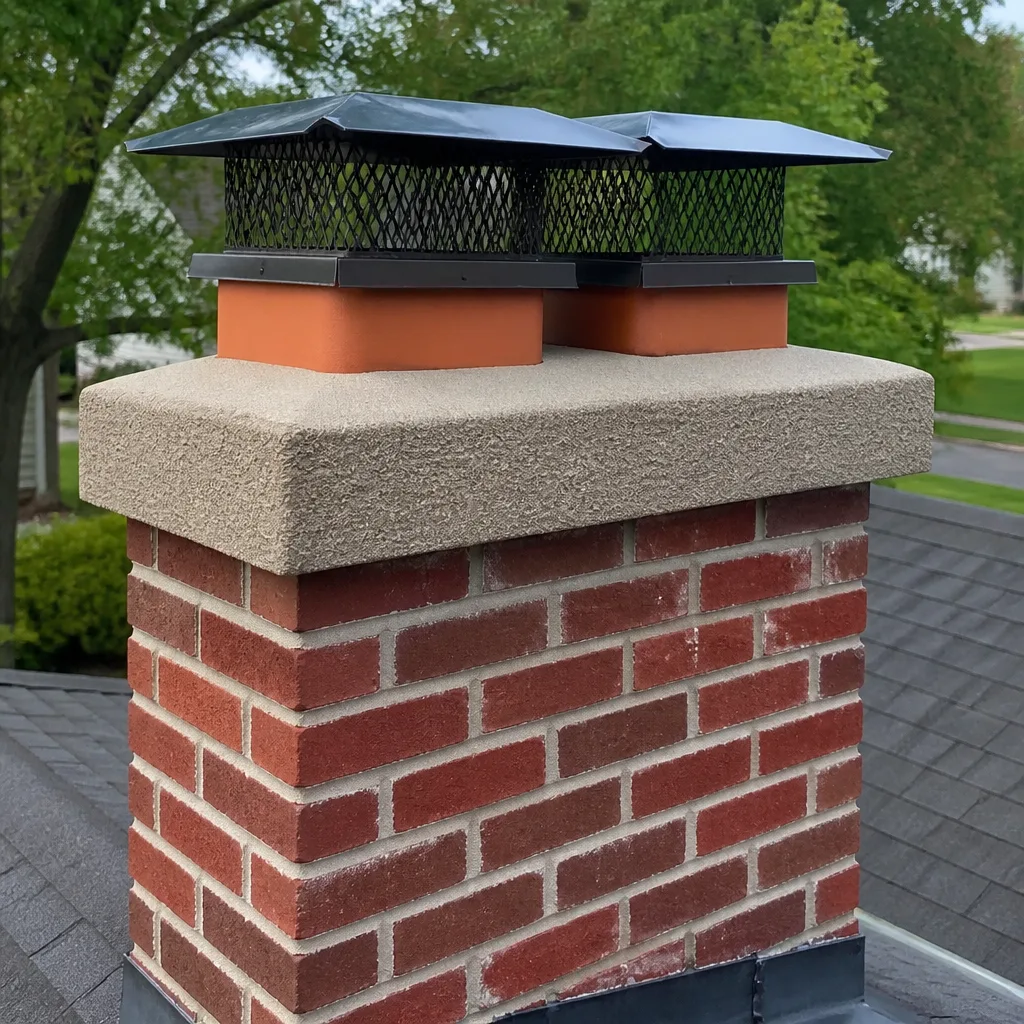
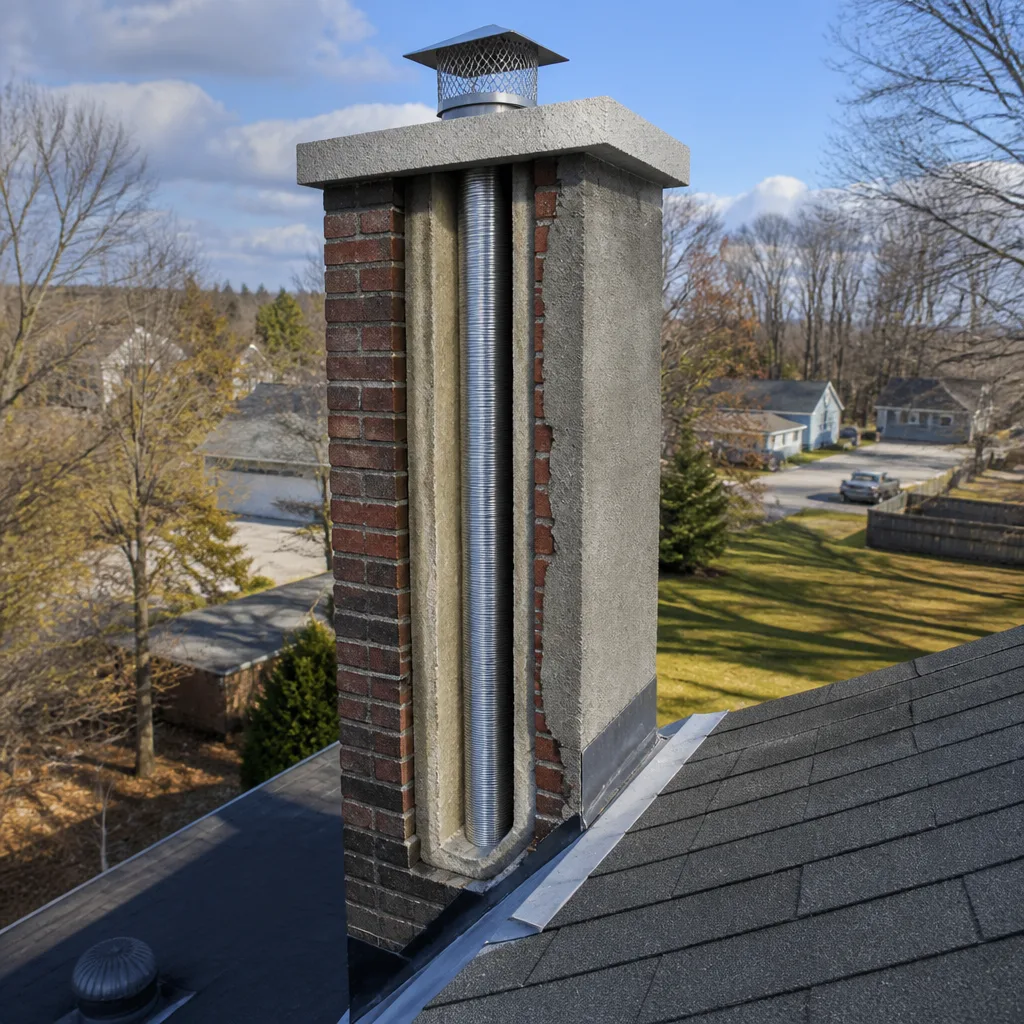
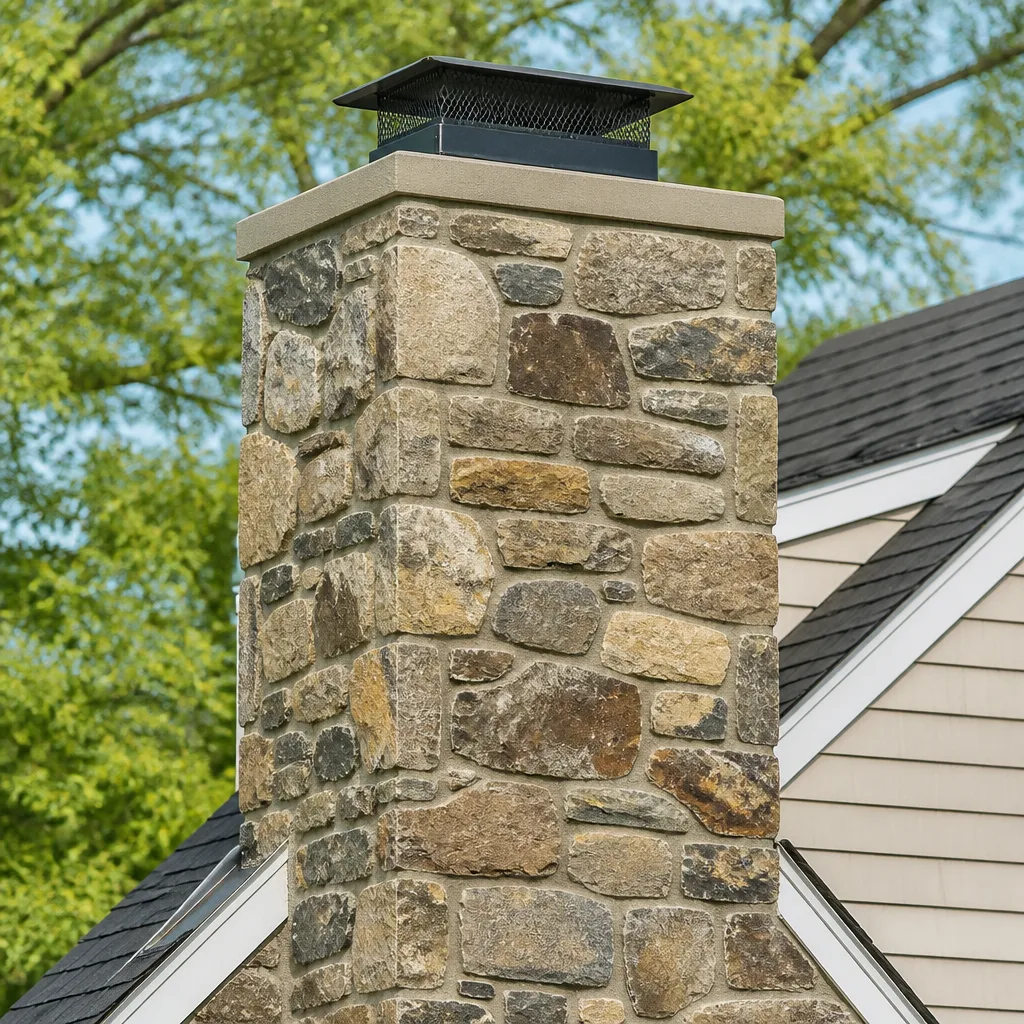
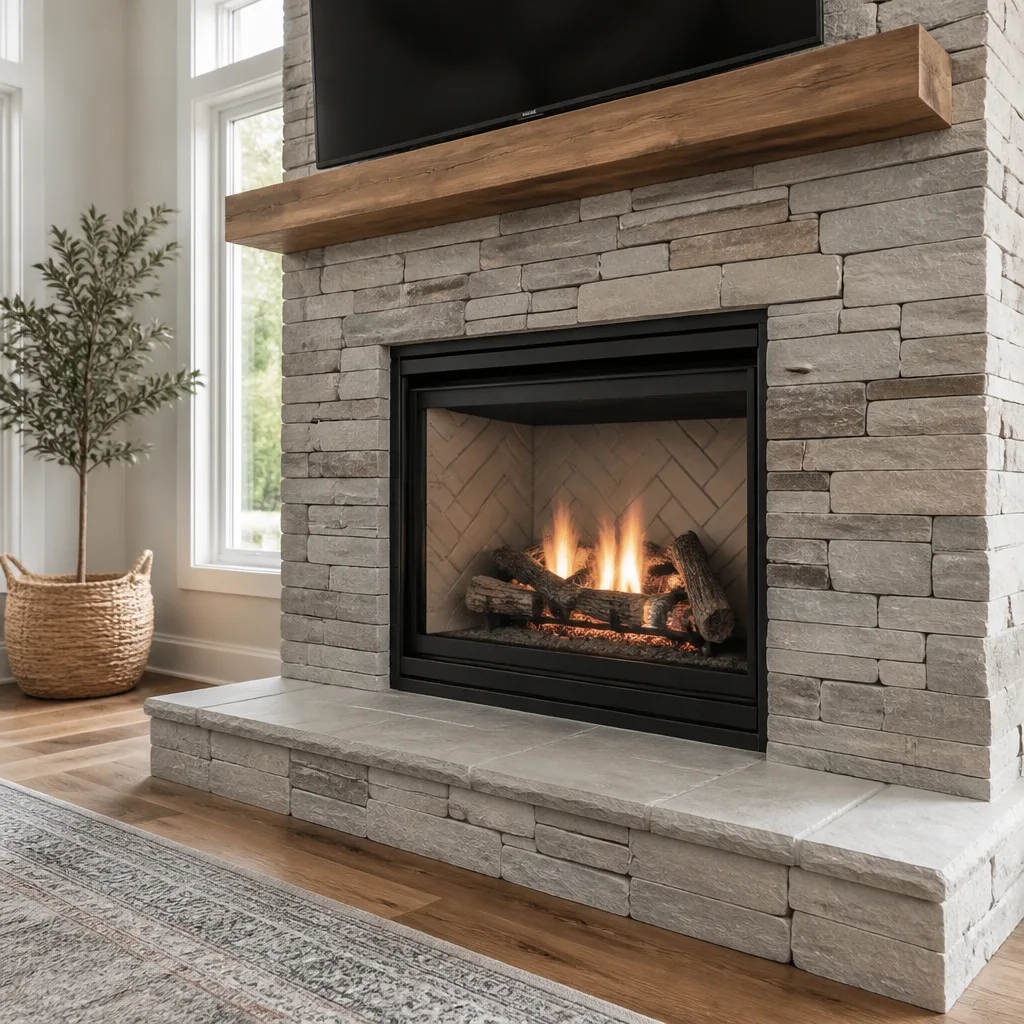
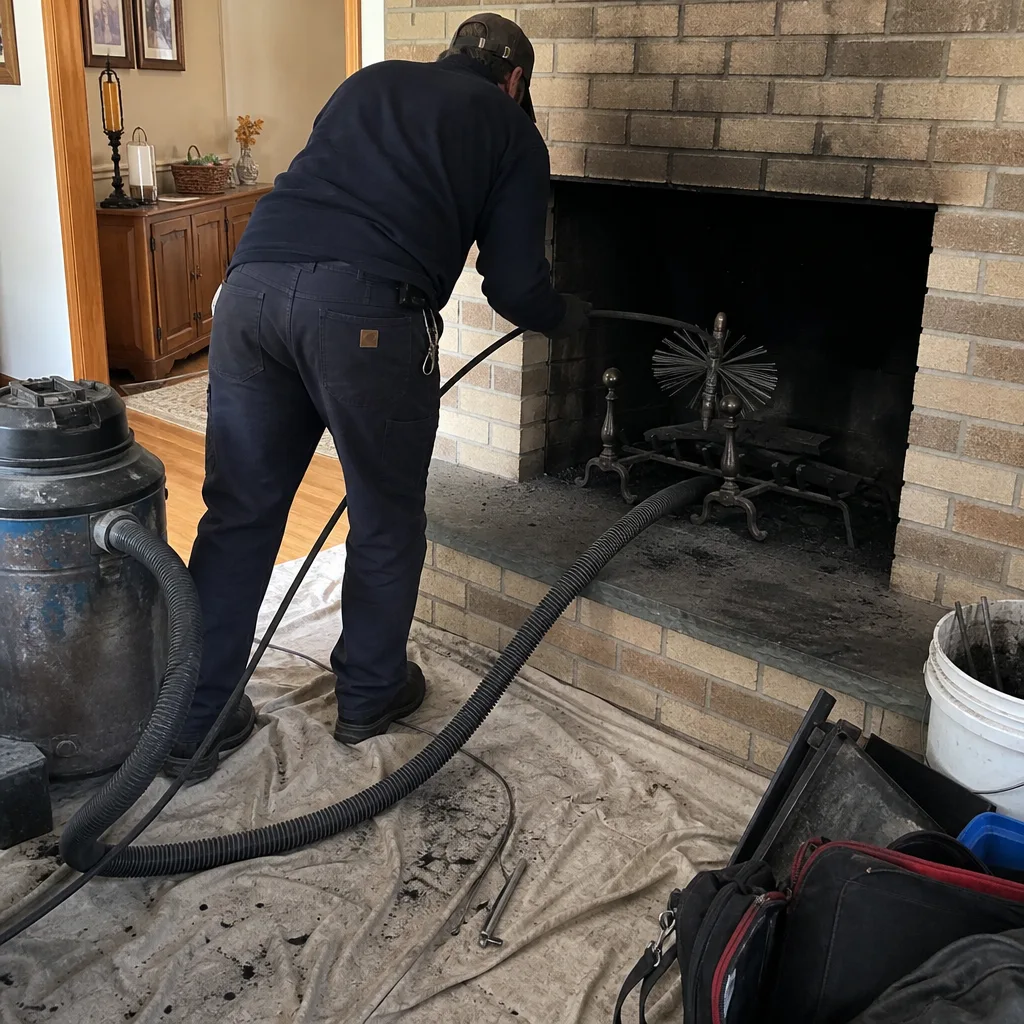 Before
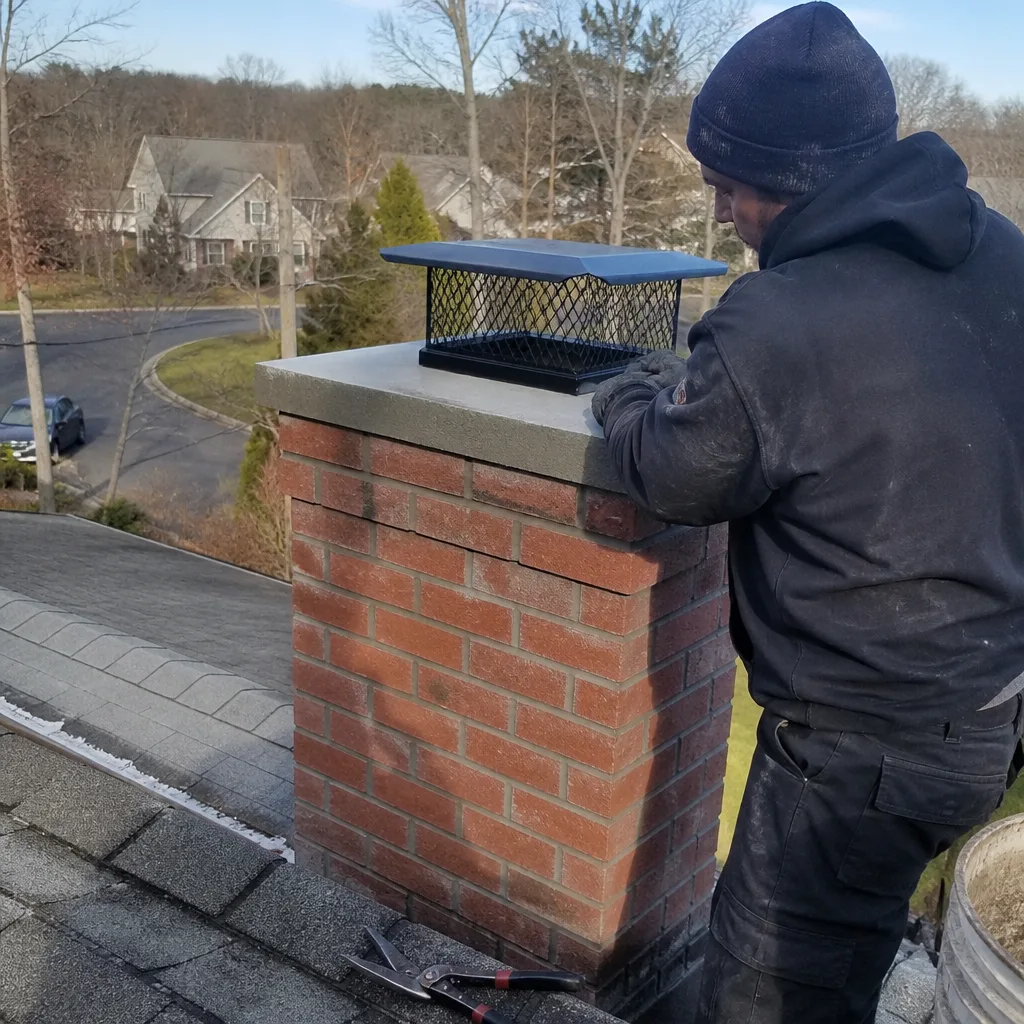 After
After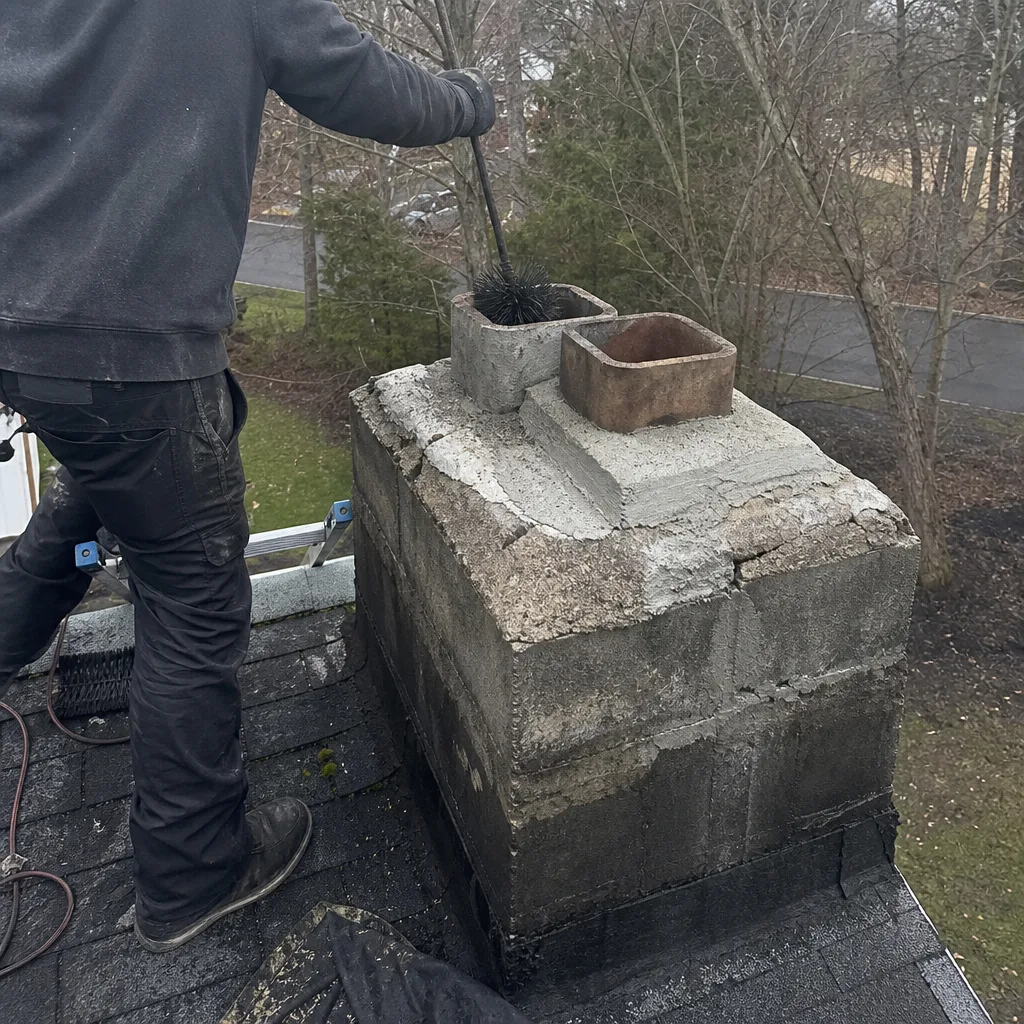 Before
 After
After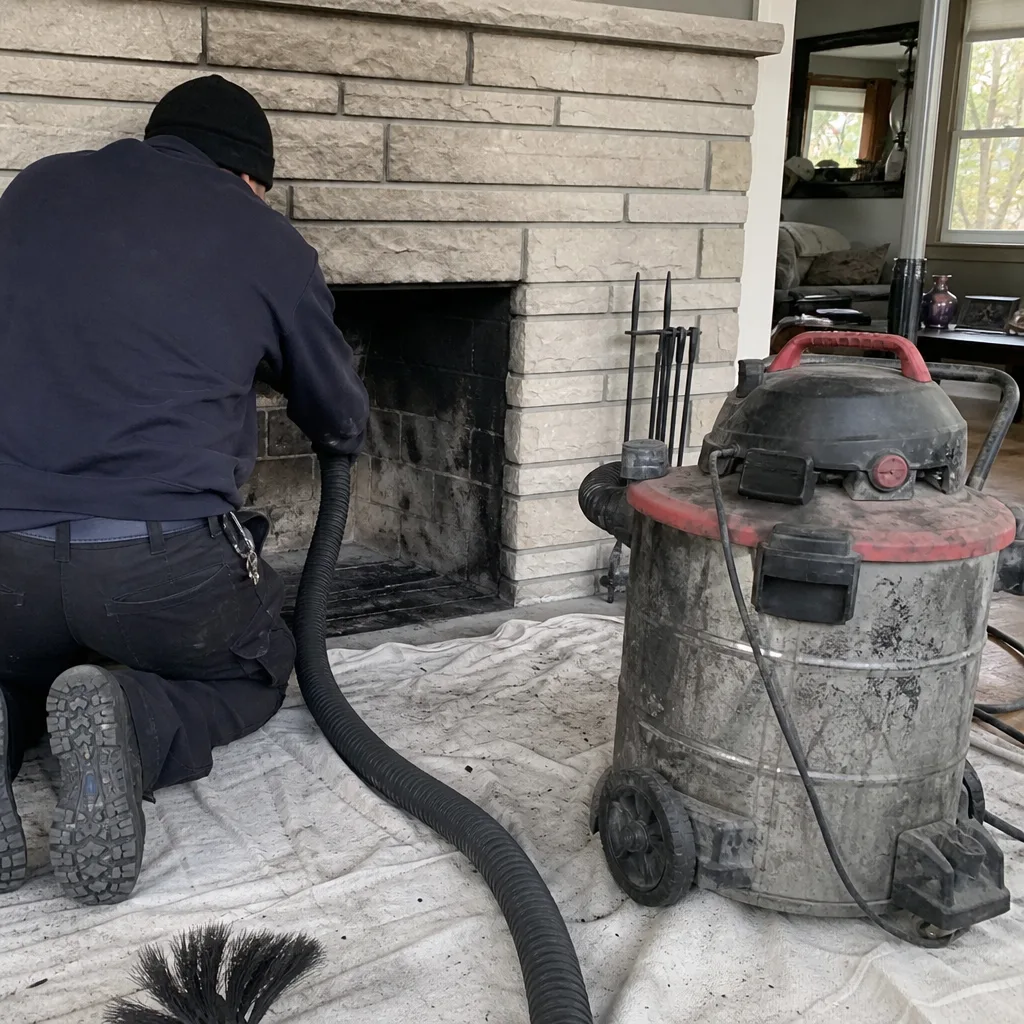 Before
 After
AfterChimney Cleaning Warning Signs: A Commack Homeowner’s Reference Guide
Here is something that surprises most Commack homeowners: the majority of chimney problems we find on emergency calls have been quietly developing for two or three years before anyone picks up the phone. Not because the signs weren’t there. They were. They just looked like small things, easy to shrug off. A little smoke smell. A damper that needed a nudge. A few dark flakes in the firebox. By the time a problem announces itself with a chimney fire or water staining the ceiling joists, the repair bill has usually tripled. This guide and our more guides & resources are meant to stop that rationalizing early. By the time you finish reading, you will know exactly which warning signs mean stop burning immediately, which ones mean schedule a sweep this month, and which ones just mean keep an eye on it for next year.
Quick Answer
The warning signs that matter most in a Commack chimney are a smoke smell in the house when the fireplace hasn’t been used, dark shiny or puffy creosote buildup you can see in the firebox or flue, water staining on the ceiling or walls near the chimney, and any animal noise from inside the flue. Any one of these calls for a professional chimney inspection before the next fire. Most are fixable cheaply if caught early, and none of them get better on their own.
Table of Contents
- The Smell of Smoke Where There Shouldn’t Be Any
- Warning Signs by Urgency: Stop, Schedule, or Watch
- Exterior Warning Signs You Can See From the Ground
- Sounds Homeowners Dismiss and What They Actually Mean
- Gas Fireplace Warning Signs: A Different Rulebook
- Creosote: The Three Stages and Why Commack Homes Get More of It
- Water Warning Signs: Chimney Leaks Before the Ceiling Stains
- Common Mistakes to Avoid
- When to Call a Professional
- Frequently Asked Questions
The Smell of Smoke Where There Shouldn’t Be Any
The smell of smoke in a room where the fireplace hasn’t been lit in three days is not a quirk of old houses. It is your chimney telling you something specific, and it has a name. We call it a draft reversal, and in Commack homes built in the 1960s and 1970s, it happens more than most owners realize.
Here is what is actually going on. Your chimney works because warm air inside the flue rises, pulling fresh air into the firebox and carrying smoke up and out. When the fireplace sits cold for a few days, that warm column of air disappears. What is left is a flue full of cooler, heavier air, and if your house is tight and something is running, a bathroom exhaust fan, a kitchen hood, even a clothes dryer, the house can pull air down the chimney instead of up it. That air rides straight through the flue and into your living room. And it smells like the last fire you burned, because it is passing over creosote deposits and old ash as it comes down.
But here is the part that matters. A draft reversal is not just a smell problem. It means the chimney is now delivering combustion byproducts into your living space whenever conditions line up. Carbon monoxide is colorless and odorless, so the smoke smell is the only warning you get that the flue is flowing the wrong direction. If you smell smoke from a cold fireplace on a humid Commack summer day or a windy fall afternoon, call a sweep. This is a chimney cleaning in Commack situation, not necessarily a “wait and see” one, because the flue needs to be checked for airflow and obstructions before you trust it again.
Warning Signs by Urgency: Stop, Schedule, or Watch
Not every chimney warning sign is an emergency. Treating them all the same is how homeowners end up either ignoring a real hazard or paying for an urgent callout that could have waited until next month. Here is how we sort them, and how you should too.
Stop Using the Fireplace Immediately
These signs mean do not light another fire until a professional has looked at the chimney:
- Smoke smell in the house when the fireplace is cold. This is a draft or blockage issue, and it can deliver carbon monoxide into the house.
- A sulfur or rotten-egg smell near the fireplace. This is not creosote. It points to a possible gas leak at a gas log set or insert, or decomposition inside the flue. Treat it as urgent.
- Hearing animals inside the chimney. A raccoon or squirrel nesting in the flue is not a nuisance. It is a fully blocked chimney. Birds can clog a flue with nesting material faster than most people realize, and a blocked flue sends smoke and carbon monoxide into the house.
- Water leaking into the firebox during rain. This means the chimney has lost its seal at the crown, flashing, or masonry. Water plus creosote makes a corrosive acid that chews through mortar and flue liners. It does not dry out and go away.
Schedule Within the Month
These are signs that the chimney needs work soon, but you are not in immediate danger if you hold off on burning until it is addressed:
- Thick, shiny, or puffy creosote visible in the firebox or flue. This is second or third stage creosote, and it is fuel waiting for a spark. You are not in danger until you light a fire, so just do not light one.
- A damper that is hard to open or close. This usually means rust from moisture exposure or creosote accumulation on the damper plate. It is an early warning that the chimney has a moisture or cleaning issue, not a fire hazard by itself.
- White staining on exterior brick. Efflorescence. It means water is soaking through the masonry and bringing salts to the surface. Not urgent today, but the cause needs to be fixed before freeze-thaw cycles turn it into spalling and cracked brick.
Note for Next Annual Inspection
These are things worth mentioning to your sweep at the next visit, not reasons to book a separate call:
- A faint musty smell in the firebox. Often just accumulated ash absorbing humidity. A cleaning will resolve it.
- Mild smoke odor only while the fire is burning. This can be a damper adjustment, a small draft issue, or just cold-weather startup. Mention it, but it is rarely urgent.
- Cosmetic cracks in the firebrick. Hairline cracks in the firebox brick happen from heating and cooling cycles. The sweep will check them during the regular visit.
A word on judgment. Wendell Pike has been working chimneys in the Commack area since 1999, and he will tell you plainly when something can wait. That is part of the reason Top Hat Chimney home customers tend to stay customers for twenty years. The goal is an honest verdict, not an upsell.
Exterior Warning Signs You Can See From the Ground
You do not need a ladder to spot most major exterior chimney problems. You need to know what to look for, and to look with the same attention you give your roof shingles after a windstorm. Here is a ground-level inspection list, in order of what we find most often on Commack homes:
- White, chalky staining on the brick. Efflorescence. It means water is moving through the masonry. On Long Island, the freeze-thaw cycles between November and March turn that trapped water into ice, which expands and slowly breaks the brick apart. Catch it at the staining stage, and the fix is usually a crown repair and a water repellent. Wait until the brick face starts flaking off, and you are looking at rebuilding sections of the chimney.
- A leaning chimney. Step back and sight the chimney against the house corner or a known vertical line. A lean of even a couple of inches usually means the footing has failed or the masonry has absorbed so much water that it is no longer supporting its own weight. This is a structural issue, and it only moves in one direction: worse.
- Missing or damaged chimney cap. The cap is the metal roof over your flue. If it is rusted through, missing, or sitting crooked, rain is falling straight into the flue. That water soaks into creosote, corrodes the damper, and eventually rusts out the firebox floor. A chimney repair in Commack for a missing cap runs a few hundred dollars. Replacing the entire firebox because the cap was missing for three years runs into the thousands.
- Cracked or crumbling crown. The crown is the concrete slab on top of the chimney that the cap sits on. When it cracks, water gets into the space between the flue tile and the surrounding masonry, which is exactly where it should never go. Crown cracks are easy to spot from the ground on a sunny day because the crack lines catch shadows.
- Dark staining or moss on the chimney exterior. Moss means the brick surface is staying wet for long periods. That is a water management problem, not a cosmetic one.
- Damaged flashing. The flashing is the metal where the chimney meets the roofline. If you can see it curling, pulling away, or if the caulk around it is cracked and gray, water is getting into the joint. This is the most common source of ceiling stains near the fireplace in Commack split levels and colonials.
We will say it plainly: every one of these signals is a camera check for us. The phone quote is a range. The number on the invoice matches the number on the quote, every time, and if it is not right within 90 days, one call brings Wendell back. That is the 90-Day Done Right Promise, in writing, on every job.
Sounds Homeowners Dismiss and What They Actually Mean
Chimneys make noise, and most of it is not the fire. Here are the three sounds Commack homeowners mention to us most often, usually in an offhand way at the start of a call, and what each one actually signals:
Animal Noise
Scratching, chirping, flapping, or the sound of something moving in the flue. This is not a small matter. A raccoon can set up a nest in a flue in a single night, and once a mother raccoon has kits in there, she will defend the space aggressively. Squirrels nest in unused flues during the spring and fall. Birds, especially chimney swifts, can build a nest that blocks the flue by half in a matter of days. The warning sign to listen for is movement noise that repeats at dawn or dusk, which is when these animals are most active. The fix is a proper chimney cap with a spark arrestor, installed after the animal is removed and the flue is cleaned. Commack sits in a wooded enough stretch of Suffolk County that we see this constantly.
Popping or Cracking During a Fire
Some popping is just normal firewood with a bit of moisture in it. But a rapid, repeating pop from inside the chimney, not the firebox, is often creosote igniting in small amounts. It sounds like the fire is throwing sparks up the flue. What is actually happening is that small pockets of creosote are catching and burning out. You are hearing a chimney fire in miniature. It is survivable when it is small. It is not survivable when the whole glazed layer catches at once. If you hear popping that seems to come from the flue itself, stop burning until the chimney is swept.
Whistling or Howling on Windy Days
A chimney that howls when the wind blows is telling you something about the damper fit or the flue size. Sometimes the damper is warped and air is whistling past it. Sometimes the flue is oversized for the appliance and wind eddies create a low howl. Neither is dangerous by itself, but a howling chimney is often a draft-poor chimney, and draft-poor chimneys are the ones that smoke back into the house when you light a fire. Worth mentioning at the next sweep.
Gas Fireplace Warning Signs: A Different Rulebook
Commack has a significant number of gas inserts and gas log sets, and the warning signs for those are not the same as for a wood fireplace. There is no creosote buildup, but there are air quality and carbon monoxide risks that many homeowners do not know to watch for.
Soot buildup on gas logs or decorative glass. Gas flames should burn clean and blue. If you are seeing black soot accumulating on the logs, on the glass front, or on the wall above the fireplace, the burner is not getting the right air mixture. The flame is burning rich and producing carbon monoxide at higher levels than it should. This is a service call.
A lazy, yellow, or flickering flame. A healthy gas log set burns with a steady, mostly blue flame with yellow tips. A flame that sits low, flickers erratically, or burns mostly yellow is a combustion problem. It could be a blocked burner port, a failing thermopile, or a venting issue. None of those get better by waiting.
Glass that fogs or builds white film. This is condensation trapped inside a sealed unit or moisture from the venting system. White mineral film on the inside of the glass is a venting or gasket problem, and it means combustion gases are not being exhausted the way they should be.
Any smell of gas or sulfur. Call your gas utility first to rule out a leak, then call us. This is the one warning sign that should never be reasoned away or compared to other people’s fireplaces.
For gas fireplace service, our crew works with fireplace services in Commack every week, and we install and service equipment from Copperfield and Gelco, along with other brands we have trusted for years. Gas systems are more forgiving than wood chimneys in some ways and far less forgiving in others, mainly carbon monoxide. A gas insert that fails its combustion test is not something we will sign off on just because the flame looks pretty.
Creosote: The Three Stages and Why Commack Homes Get More of It
Your flue doesn’t care how the fire looks. It cares how it breathes. And what most homeowners do not realize is that creosote buildup happens fastest in the chimneys that are used the most for low, slow fires, the kind of fires people burn all winter in Commack family rooms.
Creosote forms when wood smoke cools and condenses on the flue walls. The more the smoke lingers, the more creosote forms. Here is how the three stages work:
- First-degree creosote: A dry, flaky, grayish-black dust that brushes off fairly easily. This is what forms during hot, efficient fires, and it is normal. A standard chimney cleaning removes it. Most Commack chimneys that are swept annually never progress past this stage.
- Second-degree creosote: Flakes become thicker and harder, sometimes looking like black cornflakes or crunchy tar. This burns hotter and is more difficult to remove, often requiring rotary cleaning tools. It forms when fires burn cooler, when wood is not fully seasoned, or when the flue is oversized and smoke cools too quickly.
- Third-degree creosote: A shiny, black, glassy glaze that coats the flue like a baked-on tar. It is concentrated fuel, and it burns at temperatures that can crack flue liners and ignite the surrounding framing. This is the kind of creosote we find in chimneys that have been burning green wood or running low, smoldering fires for years without a sweep. First-degree creosote is a brush job. Third-degree is a glaze, and some flues need a chemical treatment or liner work to resolve it. Catch it early.
Three factors make Commack chimneys creosote-prone. The first is wood supply. Plenty of homeowners on Long Island buy their firewood from sellers who call it seasoned when it has only been split for six months. Properly seasoned hardwood needs a full year or more. The second is combustion habits. The low, slow, glass-door fire that looks so nice on a January evening is exactly the kind of fire that drops flue temperatures low enough to build creosote fast. The third is flue sizing. Many Commack homes were built with masonry chimneys sized for open fireplaces that were later fitted with gas inserts or glass doors, changing the draft and leaving dead flue space where smoke stagnates.
At Top Hat Chimney, we carry HeatShield and DuraFlex products for liner work because, after decades of seeing third-degree creosote eat flue tiles, we only work with materials we can stand behind with a straight face. But the truth is that most homeowners never need a liner if they catch creosote at the first-degree stage with an annual sweep.
Water Warning Signs: Chimney Leaks Before the Ceiling Stains
By the time a homeowner sees a brown stain on the ceiling near the fireplace, water has been in the chimney for a while. The stain is a late-stage symptom. Here are the earlier ones, and where they usually show up first in Commack houses:
Dampness or musty smell in the firebox. After a rain, does the firebox feel damp to the touch, or does it smell like a wet basement? That is water getting in somewhere above, either through the crown, the cap, the flashing, or the masonry itself. The firebox is the bottom of the chimney, so it is the first place water reveals itself.
Rust on the damper. The damper sits directly below the flue, so rust on the damper or its hinges means water has been falling down the flue. A rusted damper is not just a replacement item. It is proof of water entry, and the entry point needs to be found too, or the new damper will rust just the same.
Crumbling mortar joints outside. Stand back and look at the chimney. If the mortar lines are recessed, sandy, or falling out in chunks, water is getting a path into the wall cavity. On Long Island, winter temperatures take that water through freeze-thaw cycles all season, and every cycle widens the cracks a little more.
White efflorescence we already covered. It is the earliest visible sign. Do not wait for it to turn into spalling, which is when the brick faces begin popping off entirely. Spalling brick is a rebuild, not a repair.
Water is the slowest-moving chimney problem and, because of that, the one homeowners most often talk themselves out of addressing. The chimney gets wet, then it dries. It gets wet, then it dries. What is happening in between is cumulative. Masonry is porous, and every wet cycle dissolves a little more of the binding material. A $400 crown repair caught in year two is a $4,000 masonry rebuild by year eight. The numbers are not exaggerated. We quote them every season.
Common Mistakes to Avoid
- Burning green or partially seasoned wood because it was labeled “seasoned” at the roadside stand. Green wood burns cool and builds creosote fast. If you can hear the wood hiss when it burns, it is still too wet. Buy your wood in spring and let it age under cover until winter.
- Using the fireplace as a primary heat source without an annual sweep. The more you burn, the more often the flue needs cleaning. In a cold Commack winter, a fireplace used most evenings can build a dangerous creosote load in a single season.
- Ignoring a damp firebox because “it’s been like that for years.” It has been getting worse for years, is what it has been doing. The fix is cheaper now than it will be next year, and cheaper still than the year after.
- Trusting a national chain’s phone quote sight unseen. If a company quotes a full flue rebuild without putting a camera up the chimney, ask questions. A written estimate should be based on what is actually in your flue, not what the salesperson assumes is there. That is why Top Hat Chimney gives a free second opinion on any competing written estimate.
- Putting off a missing chimney cap because “the rain mostly comes in the other direction.” Rain falls from every direction on Long Island. The cap is one of the cheapest components in the entire chimney system, and it protects everything below it.
- Burning a fire to “burn off” creosote. This is a myth that keeps chimney sweeps in business. The heat from a normal fire is not high enough to remove third-degree creosote, and a hot fire over a creosote-loaded flue is exactly how chimney fires start.
- Skipping a gas fireplace inspection because “it’s not a real fire.” Gas fireplaces produce carbon monoxide too, and they fail differently than wood systems. They need a combustion check and a visual inspection at least every other year, every year if they get heavy use.
When to Call a Professional
Call a professional if you have noticed any of the stop-burning signs above, or if the chimney has not been inspected in more than a year and you plan to use it this season. Not sure who to trust? Read How to Hire a Chimney Cleaning Contractor in Commack: A Step-by-Step Guide first. Also call if you just bought the house and the previous owner cannot tell you when the chimney was last cleaned. A home inspection is not a chimney inspection; most home inspectors do not run a camera up the flue. Top Hat Chimney offers free estimates in Commack, and a real person answers the phone around the clock at (631) 502-3612. Wendell will talk you through what you are seeing before you spend a dollar.
Frequently Asked Questions
In Commack and the surrounding Suffolk County area, a standard chimney sweep typically runs between $180 and $340, depending on flue size, creosote stage, and access. A sweep that also includes a camera inspection runs toward the higher end but is worth it if you have never seen the inside of your flue. Call (631) 502-3612 for an exact quote before anyone comes out, no trip charge applies inside our service county.
Not always. A cracked or spalling flue liner is a real problem and often does require a liner, but you should never accept that recommendation without seeing the camera evidence for yourself. We show every homeowner their flue footage and explain in plain English what we are seeing and what it means. If the liner can wait, we say so. If it cannot, we quote the work with materials from DuraFlex or HeatShield and stand behind it with the 90-Day Done Right Promise.
Once a year, burn or no burn. Chimneys break in the off-season too, and a chimney that sat unused all summer is the one most likely to have a bird nest, a dead animal, or water damage by the time fall comes. The National Fire Protection Association recommends an annual inspection regardless of usage, and that is the schedule we follow.
At best, you get a smoky fire and a house that smells like a campfire for three days. At worst, creosote ignites in the flue, and a chimney fire cracks the liner and spreads heat into the framing around the chimney. Those are the calls we get in January, and they are never cheap. The annual sweep is a small fraction of the cost of a chimney fire repair.
You can brush a first-degree creosote flue yourself if you have the right tools and are comfortable on a roof, but most homeowners do not have the right brush size, the right ladder setup, or the experience to know whether they actually got the flue clean. See our DIY vs Professional Chimney Cleaning: The Commack Homeowner’s Decision Guide for a closer look at what is involved. And a homeowner cannot inspect the flue lining for cracks the way a camera can. We recommend a professional sweep, and we also recommend staying off the roof, Commack chimneys are not where you want to learn ladder safety.
A chimney cap keeps rain out of the flue, keeps animals out of the flue, and acts as a spark arrestor so embers do not land on your roof or your neighbor’s roof. It is the single most cost-effective piece of chimney hardware on the market. We install caps on nearly every chimney we clean that doesn’t already have one.
The Bottom Line
Chimney warning signs in Commack homes fall into three categories: stop burning now, schedule within the month, and mention at the next sweep. The trick is knowing which is which, and the answer is usually found by looking and smelling carefully. A smoke smell from a cold fireplace, a sulfur smell near a gas insert, animal noise in the flue, or water in the firebox all mean stop and call. Creosote beyond the first-degree stage, a sticking damper, or efflorescence on the brick mean schedule soon. And a faint musty firebox or cosmetic cracks can wait for the annual visit. The common thread is that none of these problems fix themselves, and most of them get exponentially more expensive the longer they are ignored. If you are seeing any of the warning signs in this guide, call Top Hat Chimney at (631) 502-3612. Wendell has been working Commack chimneys since 1999, and he will tell you straight whether the job needs doing now, later, or not at all.
Written by Wendell Pike, Owner at Top Hat Chimney, serving Commack since 1999.